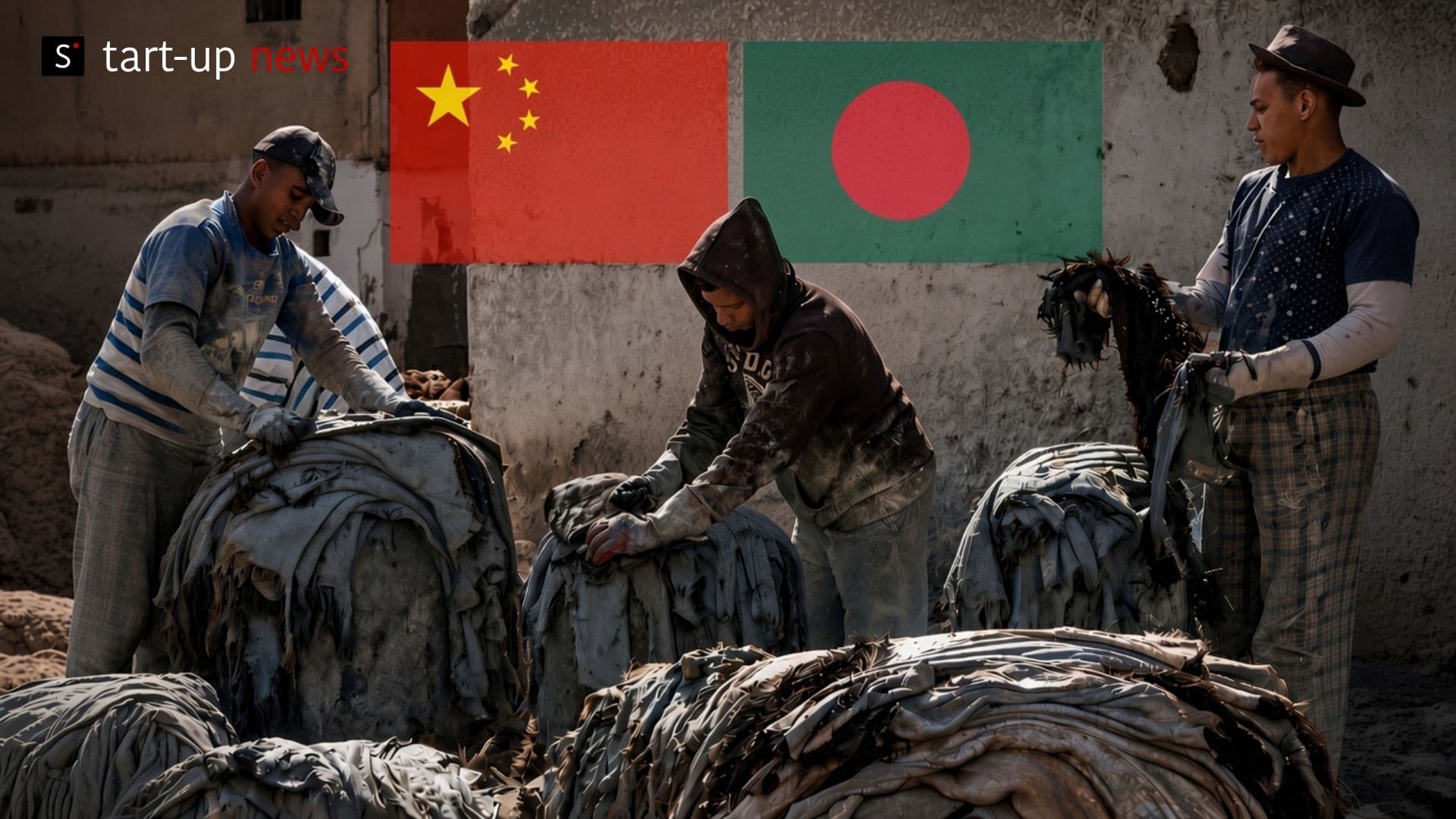
Chinese Firm Earns $1.5 Million by Exporting Gelatin and Protein Powder Made from Savar Tannery Waste.
A Chinese-invested company is turning solid tannery waste from Savar into gelatin and industrial protein powder, exporting products worth around $1.5 million to international markets.
Solid waste from Bangladesh’s leather industry is being turned into value-added products, with a Chinese-invested company in Savar generating around $1.5 million in export earnings from gelatin and industrial protein powder.
The initiative is being carried out by two companies under China’s Wenzhou Yuanfei Group — Bangladesh JW Animal Protein Company Limited and Yongli Biotechnology Company Limited. The companies process solid waste collected from tanneries in the Savar Tannery Industrial Estate and surrounding areas.
According to information reported by The Business Standard, the companies have exported around $1.5 million worth of products to countries including China and Cambodia since beginning commercial operations. The exports include approximately $1.3 million worth of gelatin and around $300,000 worth of industrial protein powder.
The facilities process materials such as wet-blue dust, leather trimmings and other solid tannery waste. The companies reportedly collect and process around 15,000 tonnes of tannery waste annually.
Bangladesh JW Animal Protein has an annual gelatin production capacity of around 5,000 tonnes. Its gelatin is primarily used for applications such as pharmaceutical capsule shells, while the industrial protein powder is used in leather processing.
The companies have invested around Tk 100 crore in the facilities and use processing technologies along with an Effluent Treatment Plant (ETP). In 2025, Bangladesh JW Animal Protein also signed a memorandum of understanding with Dhaka Tannery Industrial Estate Waste Treatment Plant Company Limited for the collection and processing of tannery waste.
Tannery waste management has remained a major environmental challenge for Bangladesh’s leather industry. Materials such as chrome shaving dust and leather trimmings can create pollution risks when improperly disposed of.
By processing these materials into industrial products, the companies are creating a waste-to-resource model that combines waste management with manufacturing and export activity.
The companies are also reportedly exploring opportunities to export their products to additional markets, including Turkey and the United States, subject to the necessary approvals and documentation.
The development highlights the potential of circular-economy approaches in Bangladesh’s leather sector, where industrial waste can be processed into commercially valuable products instead of being disposed of as waste.
Related Stories

JCI Dhaka Founders Wins Most Outstanding Local Organization at JCI ASPAC 2026 — a First for Bangladesh

Red Sparrow Digital Leading the Way in Bangladesh’s Digital Marketing Industry