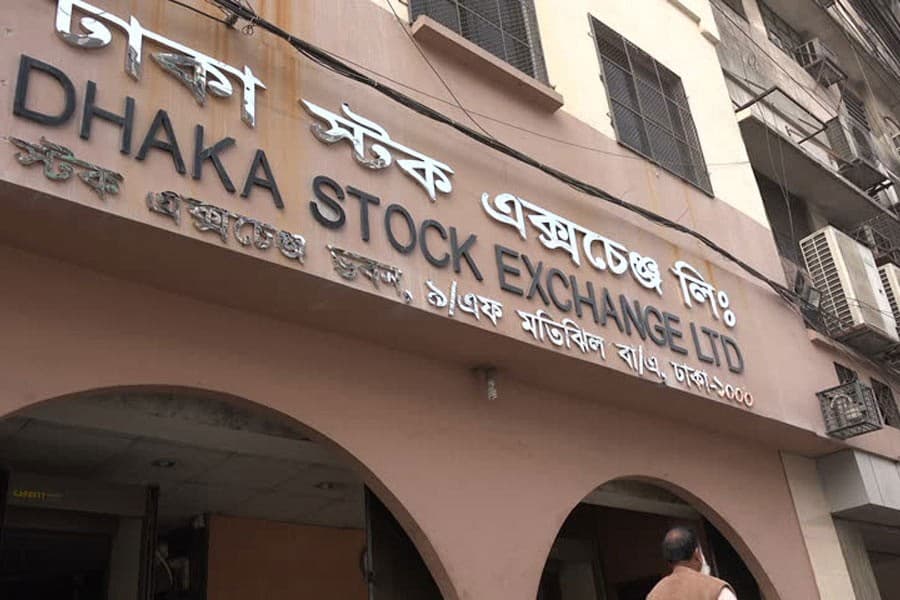
DHAKA – The Dhaka Stock Exchange (DSE) showed signs of recovery this week as the benchmark DSEX index moved above the 5,300 level. The gain reflected improved investor sentiment, steady trading activity, and recent changes in corporate tax policy that may benefit listed companies.
The DSEX rose 44.81 points, or 0.85%, to close at 5,302.23. It was the first sustained close above 5,300 in several months, suggesting that the market may be regaining some momentum after a prolonged period of weakness.
Technical indicators improve
Several technical indicators pointed to a firmer market trend. The index moved above both its 20-day and 50-day simple moving averages, a level that is often seen as a sign of improving short-term market conditions. The Relative Strength Index stood at 58.4, indicating positive momentum without entering overbought territory.
Trading activity was also relatively strong, with total turnover reaching BDT 8,846 million. A large share of the day’s trading came from the engineering and textile sectors, which accounted for a significant portion of market activity. This suggests that investors are showing renewed interest in larger, established companies.
Tax reforms support sentiment
The market also drew support from recent tax incentives under the Income Tax Act 2025–26. Listed companies that float more than 10% of their paid-up capital are now eligible for a 20% corporate tax rate, while non-listed companies remain subject to a 27.5% rate. The lower rate for listed firms is expected to encourage more companies to enter the stock market.
The National Board of Revenue has also introduced stricter compliance rules. Major business transactions, including salary payments, rent, and payments above Tk 5 lakh, must now be made through formal banking channels. Companies that fail to comply may face a higher tax rate of 22.5%.
Capital gains taxation has also been revised. Sponsor-directors and placement shareholders now face a 10% tax on gains, while retail investors are subject to a 15% flat rate. The changes are aimed at improving transparency and supporting greater market stability.
Sector performance mixed
The recovery was not uniform across all sectors. Banking stocks gained 1.7%, supported by active trading in City Bank. Telecom and power shares also performed well, with Grameenphone reporting higher profit and Shahjibazar Power posting strong earnings growth.
Consumer-facing companies, however, remain under pressure. High interest rates and inflation continue to affect demand and increase costs. Singer Bangladesh reported a quarterly loss, reflecting the difficulties facing parts of the manufacturing and consumer goods sectors.
Outlook remains cautious
Analysts remain cautiously optimistic about the market’s near-term direction. The next resistance level for the DSEX is around 5,320, and a move beyond that level would strengthen expectations of a broader recovery.
At the same time, risks remain. Inflation, rising energy prices, and tight financial conditions may continue to affect corporate earnings and investor confidence. Still, the combination of policy support and improving market performance has given the capital market a more stable tone.